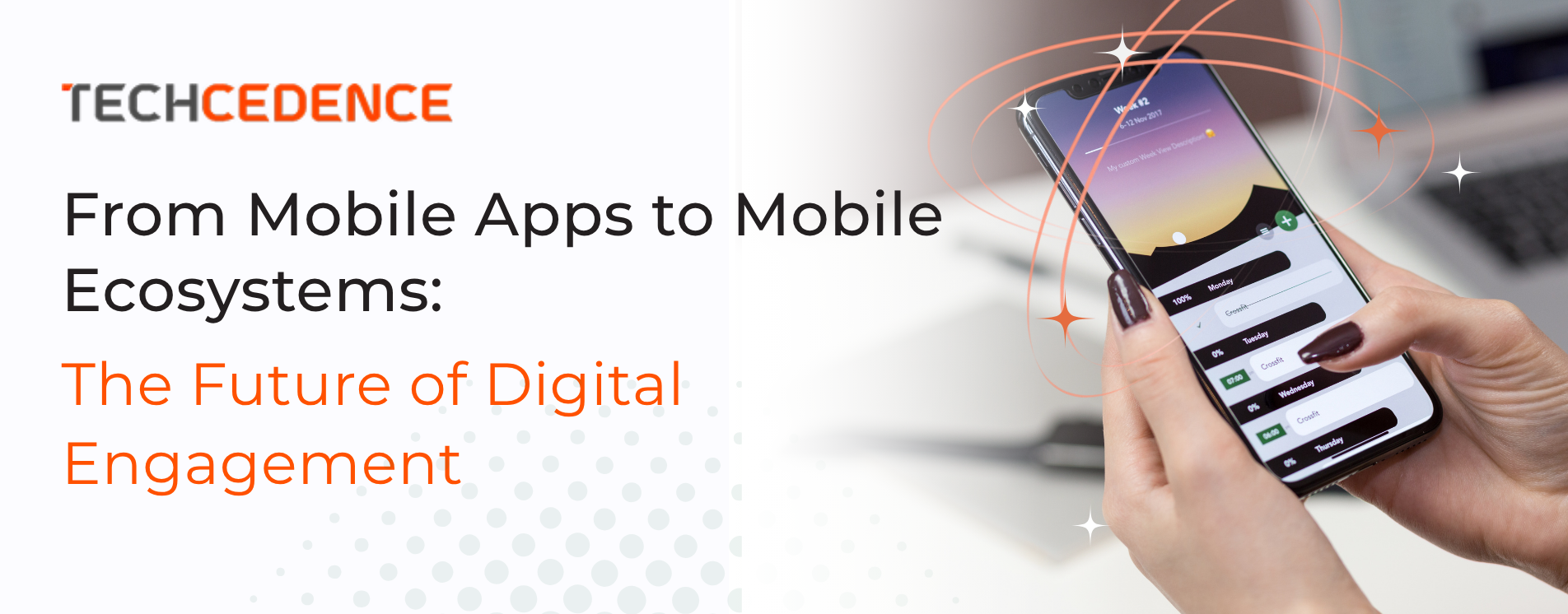
From Mobile Apps to Mobile Ecosystems: The Future of Digital Engagement
Not long ago, having a mobile app was enough to signal that a business was keeping up with the times. You built it, users downloaded it, and that was the extent of the mobile strategy. Today, that thinking feels dated. The businesses that are winning on mobile are not just offering an app. They are building entire ecosystems around their customers. Connected, personalized, and designed to grow alongside the people using them. Understanding what that shift means, and why it is happening now, is quickly becoming one of the more important conversations in business strategy.
The Single App Era Is Fading
For most of the last decade, the dominant mobile strategy was straightforward: identify a core use case, build an app around it, and focus on downloads and ratings. It worked well enough when mobile was still a secondary channel. But mobile is not secondary anymore. It is where most people spend the majority of their digital time, and their expectations have grown accordingly.
Users are no longer willing to juggle a dozen disconnected apps that do not talk to each other. They want experiences that feel joined up. They want a platform that remembers them, anticipates what they need, and removes friction at every step. Standalone apps built around a single function struggle to deliver that. The businesses that are building loyalty are the ones thinking beyond the app and toward something bigger.
At the same time, the economics of mobile are shifting. User acquisition costs have risen sharply. App store competition is intense. The old model of acquiring users through downloads and hoping engagement follows is increasingly unreliable. Businesses need mobile strategies that build lasting relationships, not just install numbers.
What Is Reshaping Mobile Right Now
Several forces are converging to push mobile strategy toward the ecosystem model, and each one carries significant implications for how businesses compete.
The rise of super apps
In much of Asia, the idea of a super app, a single platform that handles messaging, payments, shopping, bookings, and more, has been mainstream for years. WeChat and Grab are the most cited examples, but the model has proven itself across markets and categories. Western businesses are beginning to take notice, and for good reason. When a platform becomes the place users go for multiple needs, the relationship deepens in ways that a single-function app simply cannot match. More businesses are now asking how they can bundle complementary services into one coherent experience rather than maintaining separate products that compete for the same user’s attention.
Cross-platform and connected experiences
Users do not live on one device. They start something on their phone, continue it on a tablet, glance at their smartwatch for a notification, and check the results on a laptop later. Mobile strategy that only accounts for the smartphone is already incomplete. Businesses that follow the user across devices, maintaining context, preferences, and continuity throughout, create experiences that feel genuinely effortless. Those that treat each device as a separate silo create friction, and friction is where users disengage.
Personalization at scale
Personalization has moved from a differentiator to a baseline expectation. Users notice when an app treats them like a stranger after months of interaction. AI-driven personalization, which adapts content, recommendations, and interfaces based on actual behaviour, is now accessible to businesses of all sizes. The gap between apps that personalize and those that do not is visible, and users increasingly choose the former. Building personalization into the architecture of an ecosystem, rather than adding it as a feature later, is what separates experiences that feel intelligent from those that feel generic.
Mobile commerce and in-app economies
The mobile screen has become a complete commercial environment. Users browse, compare, purchase, earn rewards, and seek support all within a single session. Businesses that have built mobile ecosystems around commerce are seeing deeper engagement and higher lifetime value than those treating mobile as simply a window to a website. Subscription models, in-app currencies, loyalty programmes, and seamless checkout experiences are all part of how modern mobile ecosystems generate sustained revenue rather than one-time transactions.
Privacy, trust, and the permission economy
Users today are more aware of their data than at any point in the history of mobile. Permissions are scrutinized. Privacy labels are read. Data breaches make headlines. Building a mobile ecosystem means building trust at every single touchpoint, not just at sign-up. Businesses that are transparent about how they use data, that give users meaningful control, and that demonstrably protect what they collect will find it far easier to build the kind of engaged, loyal user base that an ecosystem requires. Trust is not a feature. It is the foundation.
Why This Matters for Your Business
The move from app to ecosystem is not just a product decision. It is a strategic one with significant business consequences.
Customer loyalty looks very different inside an ecosystem. When a user relies on your platform for multiple needs, switching becomes genuinely inconvenient. That is not lock-in in the negative sense. It is value that compounds over time. The deeper the integration into a user’s daily routine, the stronger the relationship. Businesses that own that relationship have a meaningful competitive advantage that is difficult for newcomers to replicate quickly.
Ecosystems also create operational efficiency in ways that individual apps do not. Shared infrastructure, unified user data, and consistent design systems reduce the cost and complexity of building new capabilities. Instead of spinning up entirely new products from scratch, ecosystem-minded businesses extend what already exists, which is faster, cheaper, and more coherent for the user.
From a scalability perspective, an ecosystem grows in ways that a standalone app cannot. New services, new partners, new markets. All of these become easier to incorporate when the underlying platform is designed to accommodate growth. Businesses that build with scalability in mind from the start avoid the painful and expensive rearchitecting that often comes when a product unexpectedly takes off.
How to Build for the Ecosystem Era
Shifting to an ecosystem mindset requires more than a product roadmap update. It requires a different way of thinking about architecture, data, and the user relationship from the very beginning.
The starting point is a platform mindset. Rather than asking what features to build next, the question becomes what infrastructure needs to exist to support a growing set of connected experiences. That means investing in APIs that allow services to talk to each other, a shared identity layer that recognises users across touchpoints, and a design system that keeps the experience consistent even as the platform grows.
Data architecture is equally important. Ecosystems generate rich, interconnected data about how users behave across different services. Businesses that can connect those dots and use the insights to improve the experience have a significant advantage. This requires thinking carefully about how data is collected, stored, and made accessible across the ecosystem rather than keeping it siloed within individual product teams.
Modern development practices make ecosystem building more practical than it has ever been. Modular architecture, reusable components, and continuous delivery pipelines allow teams to move quickly without compromising quality or consistency. Building in this way from the outset is far more effective than trying to retrofit ecosystem thinking onto a product that was originally built as a standalone app.
This is where Techcedence brings genuine value. Helping businesses design and build mobile ecosystems that are architected for scale, Techcedence combines deep technical expertise with a clear understanding of what it takes to turn a mobile product into a platform that grows with its users.
Looking Ahead
Mobile has become the primary relationship between businesses and their customers. Not a channel, not a touchpoint. The relationship itself. The businesses that recognize this and invest accordingly are building something that becomes more valuable over time. The ones that continue to think in terms of individual apps are building something that becomes less relevant.
The ecosystem opportunity is real, and it is open right now. But the window to lead rather than follow will not stay open indefinitely. Building the right foundation today, one designed to connect, to scale, and to earn trust, is what will determine which businesses define the next era of digital engagement and which ones spend it catching up.