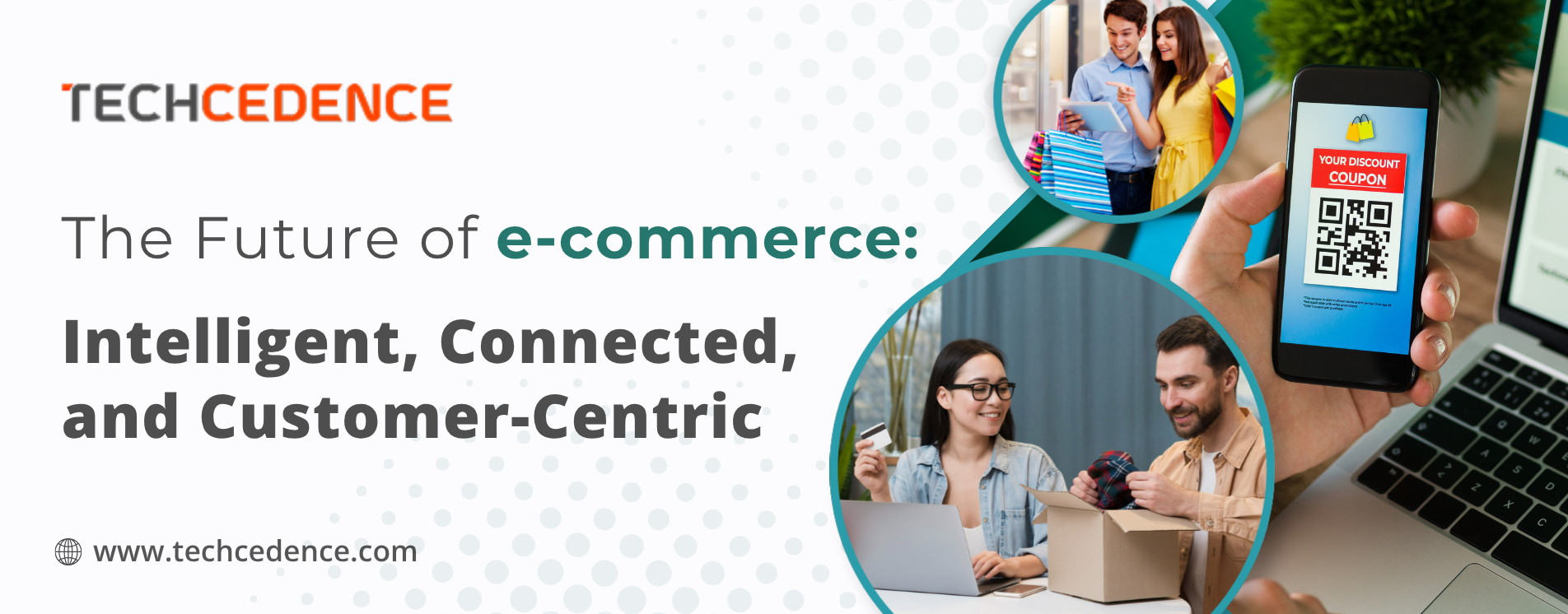
The Future of e-commerce: Intelligent, Connected, and Customer-Centric
e-commerce has moved well beyond its origins as a convenient alternative to physical retail. For most businesses today, it is the primary commerce channel and the main way customer relationships are built and sustained. But the bar keeps rising. Customers are no longer comparing their online experience to what they had a few years ago. They are comparing it to the best experience they have had anywhere, with any brand. Keeping pace with that standard is the central challenge facing e-commerce businesses right now, and the ones responding well are rethinking their platforms from the ground up.
The Basic Model Is No Longer Enough
For a long time, the formula was simple. List your products, make checkout easy, ship on time, and you’re ahead of most competitors. That formula still matters, but it no longer differentiates. It is the minimum.
What customers expect now goes considerably further. They expect the platform to know them. To surface what is relevant without them having to search for it. To work consistently, whether they are on a phone, a desktop, or walking into a physical store. To handle returns, queries, and updates without friction. When those expectations are not met, customers do not complain. They leave, and they rarely come back.
Businesses running on legacy platforms or disconnected systems are feeling this acutely. The gap between what customers expect and what the platform can deliver is not just a technology problem. It is a revenue problem.
What Is Reshaping E-commerce Right Now
AI-powered personalization
The shift from segment-based marketing to genuine individual personalization is underway, and AI is what is making it possible at scale. Dynamic product recommendations, personalized search results, tailored pricing, and adaptive homepages are all moving from premium capabilities to standard expectations. Platforms that treat every visitor the same are leaving conversion on the table. Those that use customer behaviour and purchase history to shape every interaction are seeing measurable improvements in engagement and order value.
Conversational commerce
The way customers discover and buy products is changing. Chat interfaces, voice assistants, and AI-powered support tools are becoming active parts of the purchase journey. Businesses that integrate conversational capabilities into their commerce experience are reducing the distance between a customer’s question and a completed transaction. The conversation itself is becoming the storefront.
Unified commerce and omnichannel integration
The boundary between online and offline has largely dissolved from the customer’s perspective. They expect to move between channels without losing context, without repeating themselves, and without encountering inconsistencies. Inventory, customer data, pricing, and fulfilment need to work as a single connected system rather than separate tools loosely stitched together. Businesses that achieve that unity deliver experiences that feel effortless. Those who have not yet made that investment create friction at exactly the moments it matters most.
Headless and composable architecture
Traditional monolithic e-commerce platforms were built for a different era. They are difficult to customize, slow to update, and poorly suited to the pace at which customer expectations now change. Headless architecture separates the customer-facing experience from the underlying commerce engine, giving businesses the freedom to evolve the front end without disrupting back-end operations. Composable architecture takes this further, letting businesses select and integrate best-in-class capabilities rather than being locked into a single vendor. The result is a platform that adapts quickly and grows without accumulating the technical debt that slows everything down.
Smart logistics and real-time fulfilment
Delivery has become a competitive dimension in its own right. Speed and reliability are no longer factors customers weigh against price. They are expectations. AI-driven demand forecasting, smarter inventory positioning, and real-time shipment visibility are capabilities that are becoming accessible to businesses well beyond the enterprise tier. Investing in logistics intelligence is increasingly inseparable from investing in customer experience.
What This Means for Your Business
The compounding effect of these shifts is significant. Personalization increases conversion rates and average order value. Omnichannel integration captures sales that fall through the gaps between channels. Flexible architecture reduces the time and cost of bringing new capabilities to market. Smarter logistics cut fulfilment costs while improving the post-purchase experience that drives repeat business.
These are not incremental improvements. They represent a meaningful gap between businesses that have modernized their e-commerce infrastructure and those that have not. That gap shows up in retention rates, customer lifetime value, and the speed at which businesses can respond to change. It becomes very difficult for late movers to close.
Building for Where e-commerce Is Going
Responding to this environment requires a clear-eyed assessment of where the current stack falls short and a strategic plan for building toward something more capable.
Customer data is the foundation. Unified customer profiles that connect behaviour, purchase history, preferences, and support interactions across every channel are what make personalization and intelligent commerce possible. Businesses that treat customer data as a strategic asset have a structural advantage over those that do not.
Architecture decisions made today will shape what is possible for years. Building flexibility and composability from the start, rather than choosing convenience now and paying for rigidity later, is the approach that supports long-term growth without constant rearchitecting.
Techcedence works with businesses to design and build e-commerce platforms that are intelligent by architecture, connected across systems, and built to scale alongside customer expectations. The goal is not just a better storefront. It is a commerce platform that grows smarter and more capable over time.
The Standard Is Being Set Now
The future of e-commerce belongs to businesses that treat their platform as something that evolves continuously, not something that gets rebuilt every few years. Intelligence, connectivity, and genuine customer-centricity are not features to layer on later. They are the foundation that everything else is built on.
The businesses investing in that foundation now are not just keeping up. They are setting the standard that others will spend the next several years trying to reach.