Beyond Delivery Tracking: How Connected Logistics Improves Delivery Execution
Delivery tracking has become an important part of modern logistics. Businesses can see where vehicles are, monitor delivery status, and provide customers with updates. But knowing where a delivery is does not always mean knowing whether the delivery is progressing as planned.
A delivery can be delayed by traffic, poor coordination, vehicle issues, incorrect addresses, or customer availability. When information about these events is scattered across different teams and systems, responding to them becomes difficult.
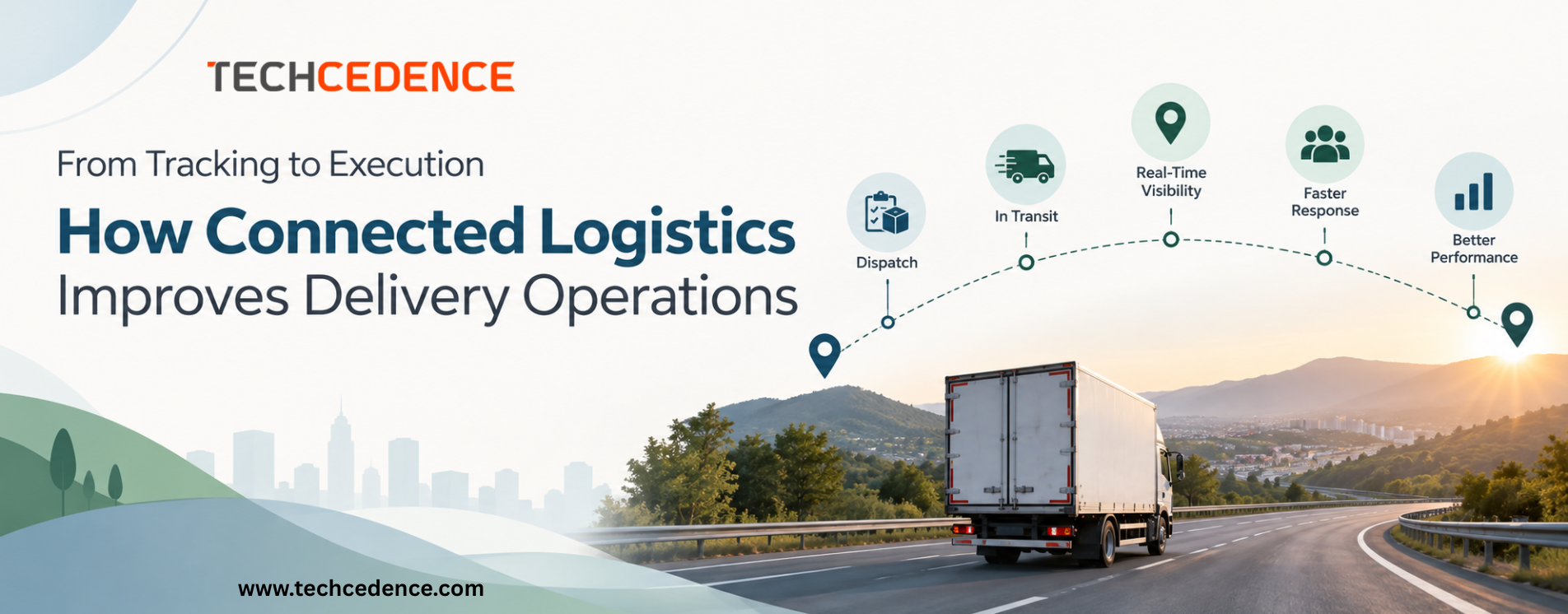
Connected logistics takes a broader approach by linking orders, drivers, dispatch teams, vehicles, and delivery updates. This helps businesses move beyond simply tracking deliveries toward actively managing and improving delivery execution.
Why Delivery Tracking Alone Has Limitations
Delivery tracking provides useful visibility, but location data alone cannot explain the complete delivery situation. Knowing that a vehicle has stopped or moved away from its expected route does not necessarily tell the operations team what caused the issue or what action is required.
Delivery execution involves several activities beyond transportation. Orders need to be prepared, assigned, dispatched, delivered, and confirmed. Delays can also occur because of customer unavailability, address issues, vehicle problems, or coordination gaps between teams.
When these activities are managed through separate systems or manual communication, teams may not have the complete information they need to respond quickly. This is where connected logistics can provide greater visibility across the delivery process.
What Connected Logistics Means for Delivery Operations
Connected logistics brings different parts of the delivery process into a shared operational flow. Instead of treating orders, drivers, vehicles, dispatch, and delivery updates as separate activities, businesses can connect them to create a clearer view of what is happening across each delivery.
This connection allows information to move between the people and systems involved in execution. Dispatch teams can work with current delivery information, drivers can receive relevant updates, and operations teams can respond when plans change.
The goal is not simply to collect more data. It is to make the right information available at the right time, helping teams coordinate deliveries more effectively and maintain better control over day-to-day logistics operations.
Connecting Dispatch With Delivery Execution
Efficient delivery starts before a vehicle leaves the warehouse. Dispatch teams need to coordinate order readiness, driver availability, delivery priorities, and routes to ensure each delivery is assigned and executed effectively.
Connected logistics helps bring these activities into a common workflow. As delivery conditions change, operations teams can access current information and adjust assignments or schedules when necessary. Drivers can also receive relevant updates without relying entirely on manual communication.
This connection between dispatch and execution reduces coordination gaps and helps businesses maintain a smoother flow from order preparation to final delivery.
Managing Exceptions Before They Become Delivery Failures
Delivery exceptions are often unavoidable, but their impact can be reduced when businesses identify and address them early. Delays, failed delivery attempts, route changes, vehicle issues, and customer availability can quickly affect schedules when there is no clear process for responding to them.
Connected logistics gives operations teams better visibility into these exceptions as they occur. Instead of discovering a failed delivery after the planned delivery window has passed, teams can identify the issue and take appropriate action while the delivery is still in progress.
This may involve changing a route, reallocating a delivery, updating the customer, or adjusting the delivery schedule. By connecting exception information with the broader delivery workflow, businesses can respond faster and reduce the likelihood of small disruptions becoming larger delivery failures.
Creating Better Visibility Across the Delivery Lifecycle
Connected logistics provides visibility beyond the vehicle’s location. It helps businesses follow each delivery from order preparation and dispatch to arrival, delivery confirmation, and completion.
With information connected across these stages, operations teams can understand the current status of deliveries without relying on multiple calls, messages, or spreadsheets. They can see which deliveries are in progress, which require attention, and where delays are affecting the overall schedule.
This broader visibility also improves coordination between dispatch teams, drivers, customer service, and management. Everyone can work with the same delivery information, making it easier to respond to changes and keep deliveries moving efficiently.
Using Delivery Data to Improve Operations
Every completed delivery generates useful operational data. Delivery times, delays, failed attempts, route deviations, and completion rates can help businesses understand how their delivery operations are performing.
When this information is captured consistently, teams can identify recurring issues and improve future planning. For example, frequent delays on certain routes may indicate the need for schedule adjustments, while repeated failed delivery attempts may highlight customer availability or address-related issues.
Over time, analyzing delivery data can help businesses improve route planning, resource allocation, delivery schedules, and service processes. This shifts delivery data from being a record of past activity to a useful input for improving future operations.
How TracLogix Supports Connected Delivery Execution
Connected delivery execution depends on having a single platform that brings delivery activities together instead of managing them through disconnected tools and manual communication. TracLogix helps businesses maintain visibility across the delivery process by connecting dispatch operations, delivery status updates, and execution workflows within a unified system.
This connected approach enables operations teams to monitor delivery progress more effectively, coordinate activities between dispatch and drivers, and maintain consistent information throughout the delivery lifecycle. Rather than focusing only on location tracking, TracLogix supports a broader operational view that helps businesses manage deliveries with greater coordination, visibility, and control.
Conclusion
Delivery tracking is an important part of modern logistics, but visibility alone is not enough to ensure effective delivery execution. Businesses also need connected workflows that bring dispatch, drivers, delivery updates, and exception management into a coordinated process.
Connected logistics helps teams respond to changes faster, improve operational visibility, and use delivery data to identify opportunities for improvement. By moving beyond basic tracking and focusing on connected execution, businesses can build delivery operations that are more coordinated, responsive, and consistent.
The goal is simple: not just to know where deliveries are, but to have the information and processes needed to manage them effectively.