Beyond Bug Fixes: How Modern Application Maintenance Supports Business Growth
Application maintenance is often associated with fixing bugs, resolving errors, and keeping software operational after deployment. While these activities remain important, modern applications need much more than basic support to continue delivering value.
As businesses change, their applications must evolve with them. New customer expectations, security requirements, integrations, technologies, and business processes can quickly make an application less effective if it is not continuously improved. Modern application maintenance therefore goes beyond fixing what is broken. It helps organizations improve performance, strengthen reliability, adapt to changing requirements, and extend the value of their existing applications.
Why Traditional Application Maintenance Is No Longer Enough
Traditional maintenance often focuses on resolving issues after they appear. While reactive support helps restore normal operations, it can leave teams constantly responding to problems instead of improving the application.
As applications grow older, technical debt, outdated components, and changing business requirements can make them harder to maintain. New features may take longer to implement, integrations can become more complex, and performance may decline as usage increases.
A modern approach looks beyond immediate fixes. It focuses on identifying potential issues early, improving the application’s underlying foundation, and continuously adapting it to changing business and technology requirements.
What Modern Application Maintenance Really Involves
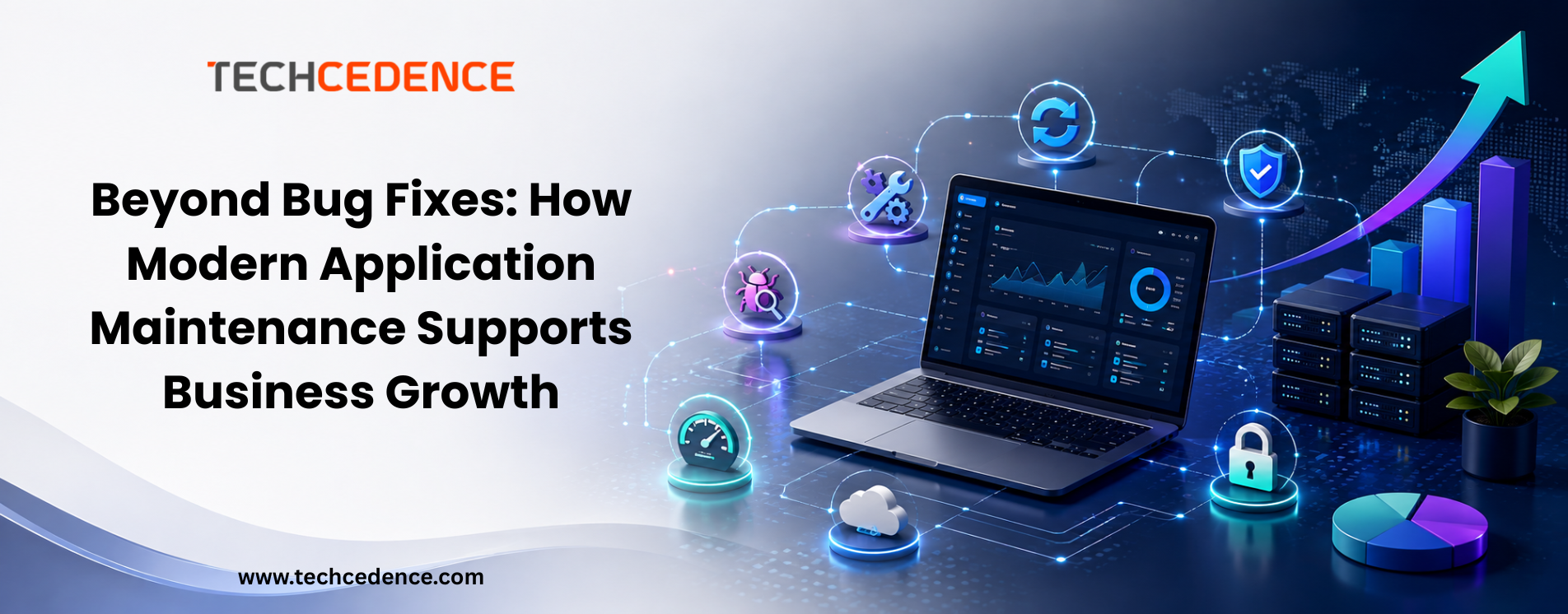
Modern application maintenance is a continuous process that keeps software reliable, secure, and relevant as requirements change. It includes performance monitoring, security updates, compatibility improvements, and regular enhancements based on business and user needs.
It also involves ensuring applications can support new integrations, platforms, and increasing workloads without unnecessary disruption. Regular reviews help teams identify areas that can be optimized before they become larger problems.
This broader approach turns maintenance into an ongoing improvement cycle. Instead of simply keeping an application operational, businesses can use maintenance to improve its quality, extend its useful life, and ensure it continues supporting evolving business objectives.
Turning Application Data Into Improvement Opportunities
An application generates valuable information through user activity, performance patterns, errors, and system usage. When this data is monitored consistently, maintenance teams can identify recurring issues and areas where the application can be improved.
For example, usage patterns may reveal features that need optimization, while performance data can highlight bottlenecks before they affect users. Feedback can also help teams prioritize enhancements that provide greater business value.
Using application data in this way makes maintenance more proactive and focused. Teams can move beyond resolving individual issues and use real insights to guide continuous improvements across the application.
Supporting Business Agility Through Continuous Improvement
Business requirements rarely remain the same for long. New customer expectations, changing workflows, and emerging market needs can require applications to adapt quickly. Continuous maintenance allows businesses to introduce these changes without having to replace the entire application.
Incremental improvements can support new features, integrations, and workflows while keeping the existing system stable. This approach also helps organizations respond faster to changing priorities and reduce the risk of their applications becoming outdated.
By treating maintenance as an ongoing improvement process, businesses can keep their applications aligned with current needs while creating a stronger foundation for future growth.
Balancing Maintenance, Innovation, and Technical Debt
Application maintenance requires a balance between addressing immediate issues and making improvements that support long-term growth. Focusing only on urgent fixes can allow technical debt to build up, making future changes slower, more complex, and costly.
Maintenance teams should regularly identify areas that need refactoring, modernization, or architectural improvements. Prioritizing these activities alongside business-critical enhancements can make applications easier to maintain and adapt.
A balanced approach ensures maintenance does not become a constant cycle of fixing problems. Instead, it creates room for innovation while keeping the application stable, maintainable, and ready for future requirements.
Building a Modern Application Maintenance Strategy
A modern maintenance strategy should combine proactive monitoring, regular application reviews, and continuous improvement. Teams can use performance data, user feedback, and business priorities to identify which areas require attention and prioritize work based on its potential impact.
Automation can also reduce repetitive maintenance activities. Automated testing, monitoring, and deployment processes help teams identify issues earlier and deliver improvements more consistently. Clear documentation and regular technical reviews further reduce dependency on individual team members.
Techcedence’s Application and Support Maintenance services help businesses maintain and evolve their applications while keeping them aligned with changing operational and technology requirements.
Measuring Maintenance as a Business Investment
Application maintenance should be measured by more than the number of issues resolved. Businesses should also evaluate improvements in application performance, uptime, user experience, and the speed at which new enhancements can be delivered.
Tracking these outcomes helps organizations understand whether maintenance efforts are creating measurable value. It can also reveal recurring problems, rising maintenance costs, or areas where modernization may be needed.
When maintenance is linked to business outcomes, organizations can make better decisions about where to invest time and resources. This shifts maintenance from a support expense to a strategic activity that contributes to application performance and long-term business growth.
Conclusion
Application maintenance has evolved beyond fixing bugs and resolving immediate issues. A proactive approach helps businesses improve application performance, address technical debt, adapt to changing requirements, and extend the value of existing software.
By combining continuous monitoring, regular improvements, automation, and strategic planning, organizations can keep their applications aligned with business needs. When maintenance is treated as an ongoing investment rather than a reactive support function, applications can become a stronger foundation for long-term business growth.