How RFID Is Powering the Next Generation of Connected Manufacturing
Manufacturing is changing faster than at any point in recent memory. The pressure to reduce waste, improve throughput, and deliver consistent quality has pushed the industry toward a new model built on connectivity, real-time data, and intelligent automation. At the center of that model is RFID. What was once considered a logistics tool has become a foundational layer of smart factory infrastructure. Manufacturers that understand what RFID can do across the full production environment are building operations that others will spend years trying to replicate.
The Blind Spots Are Getting Expensive
Traditional manufacturing operations were built around periodic visibility. Stock counts happened weekly. Production records were updated manually. Quality issues were investigated after the fact. For decades, that was workable because the pace of competition allowed for it.
That pace has changed. Supply chains are more complex, margins are tighter, and there is less room for the inefficiencies that come with operating blind. Manufacturers making decisions based on data that is already out of date are absorbing costs they cannot always see. The shift toward Industry 4.0 has made real-time operational visibility a baseline requirement. RFID is one of the most practical and proven technologies for delivering it.
Where RFID Is Making the Difference
Real-time asset and inventory tracking
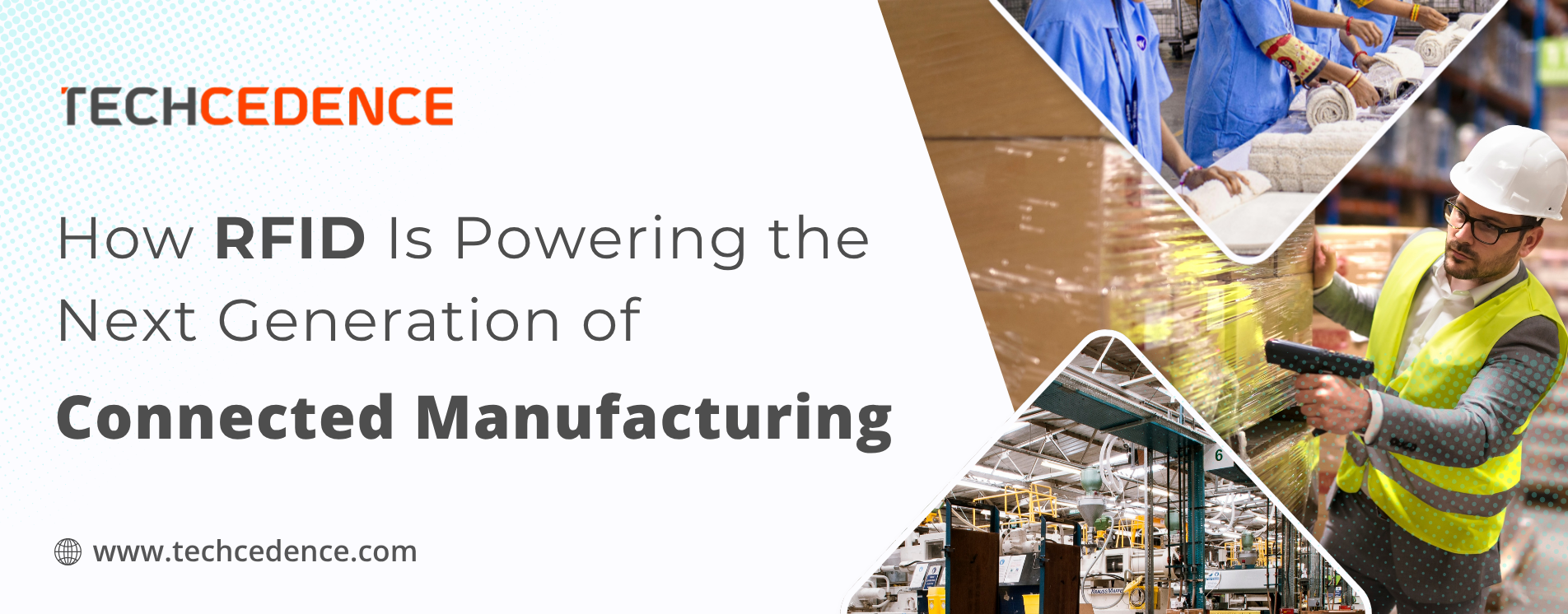
RFID gives manufacturers a live view of where assets, components, and finished goods are at any point in the production cycle. This eliminates manual reconciliation and removes the need for excess inventory buffers maintained to compensate for uncertainty. Knowing exactly what you have and where it is changes how confidently operations can be run.
Work-in-progress visibility across the production line
Tracking items through each stage of production gives operations managers a transparent view of the line in real time. Bottlenecks become visible before they become backlogs. Idle time is identified and addressed. Throughput improves without adding headcount because the inefficiencies hiding in the process are no longer hidden. RFID captures movement automatically and continuously without slowing the line down.
Quality control and traceability
Every RFID-tagged item carries its production history with it. When a quality issue surfaces, manufacturers can trace it back to a specific batch, machine, or process step in seconds. In regulated industries, this level of traceability is a compliance requirement. Beyond compliance, the ability to isolate a problem quickly and contain it precisely reduces the cost of defects significantly compared to broad recalls or manual investigations.
RFID and ERP integration
RFID data in isolation adds limited value. When it flows directly into ERP systems, the impact multiplies. Stock levels update in real time. Purchase orders trigger automatically. Production costing reflects actual material movement. Planning and forecasting improve because the data feeding them is accurate and current. This integration is where operational visibility translates into business intelligence and where manufacturers see the clearest returns.
Predictive maintenance and equipment intelligence
RFID tags on machinery and tooling, combined with usage data and maintenance records, give teams what they need to move from scheduled servicing to condition-based approaches. Equipment is maintained when data indicates it needs attention, not because a date has passed. This reduces unplanned downtime, extends equipment life, and eliminates unnecessary maintenance work.
What This Means for the Business
The business case is straightforward. Real-time inventory visibility reduces carrying costs and frees up working capital. Faster bottleneck identification improves throughput without capital expenditure. Instant traceability lowers the cost of quality failures. Better ERP data improves planning and reduces procurement errors.
RFID infrastructure also supports the broader smart factory initiatives manufacturers are building toward. IoT networks, AI-driven analytics, and automated logistics all depend on reliable, real-time floor data. RFID provides that foundation, and businesses that have it in place are better positioned to layer additional intelligence on top as those technologies mature. RFID systems deployed well can also expand across facilities and supply chain partners without starting from scratch, meaning the investment made today grows in value as the operation grows around it.
Getting the Implementation Right
The difference between an RFID deployment that delivers value and one that underperforms comes down to planning rather than technology.
Start by identifying the highest-value visibility gaps in the current operation. Not every part of the environment needs the same level of tracking. Prioritizing where real-time data has the most immediate impact produces faster returns and builds confidence across the organization.
Architecture must account for ERP and manufacturing execution system integration from day one. RFID data is most useful when it flows automatically into the systems where decisions are made, not when it sits in a separate silo. Tag and reader selection also requires careful thought given the conditions on a manufacturing floor. Metal surfaces, temperature extremes, and high-speed lines all affect performance in ways that need to be addressed during design.
Techcedence brings deep experience in RFID implementation and ERP integration, helping manufacturers design and deploy connected tracking systems that are built for the operational environment and aligned with the business systems that depend on them.
The Infrastructure Smart Manufacturing Runs On
RFID is no longer reserved for large enterprises. It is an accessible, proven technology that manufacturers of all sizes are using to build the visibility and control that modern operations require.
Every process that becomes transparent is a process that can be improved. Every data point captured feeds the intelligence that drives better decisions. As manufacturing continues its shift toward greater automation, RFID will remain at the center of the infrastructure that makes it possible. The operations building that foundation now are the ones that will lead tomorrow.